


08 Oct Outer Door Finger Guards: Why External Doors Pose Extra Safety Risks
The average door is a dangerous thing, posing potential risks to people of all ages. While seen as something of a rite of passage, trapping your fingers can have long term consequences, which are often downplayed. The risk of experiencing more serious complications becomes higher when trapping your fingers in an external door. In this blog post, we explore why external door safety needs your attention…
The real damage of finger entrapment
The impact of finger entrapment can be devastating for the individual and their families, with finger healing time varying dramatically.
In serious cases of finger entrapment, the affected digits may never fully heal at all. The risk of infection, nerve damage, and even amputation of all or part of the finger are high following finger trapping, with several signs pointing to more severe injury as Biology Insights describes:
“Severe, debilitating pain or swelling that rapidly worsens warrants immediate attention. Any visible deformity, such as a bent or crooked finger, suggests a potential fracture or dislocation. Difficulty or inability to move the finger, or persistent numbness or tingling, are also red flags. A deep laceration or open wound that bleeds profusely or exposes bone requires prompt medical care to prevent infection and other complications.”
Door crush incidents result in yet more long term complications, with some people experiencing elbow pain, migraines and depression long after injury.
The dangers of external doors
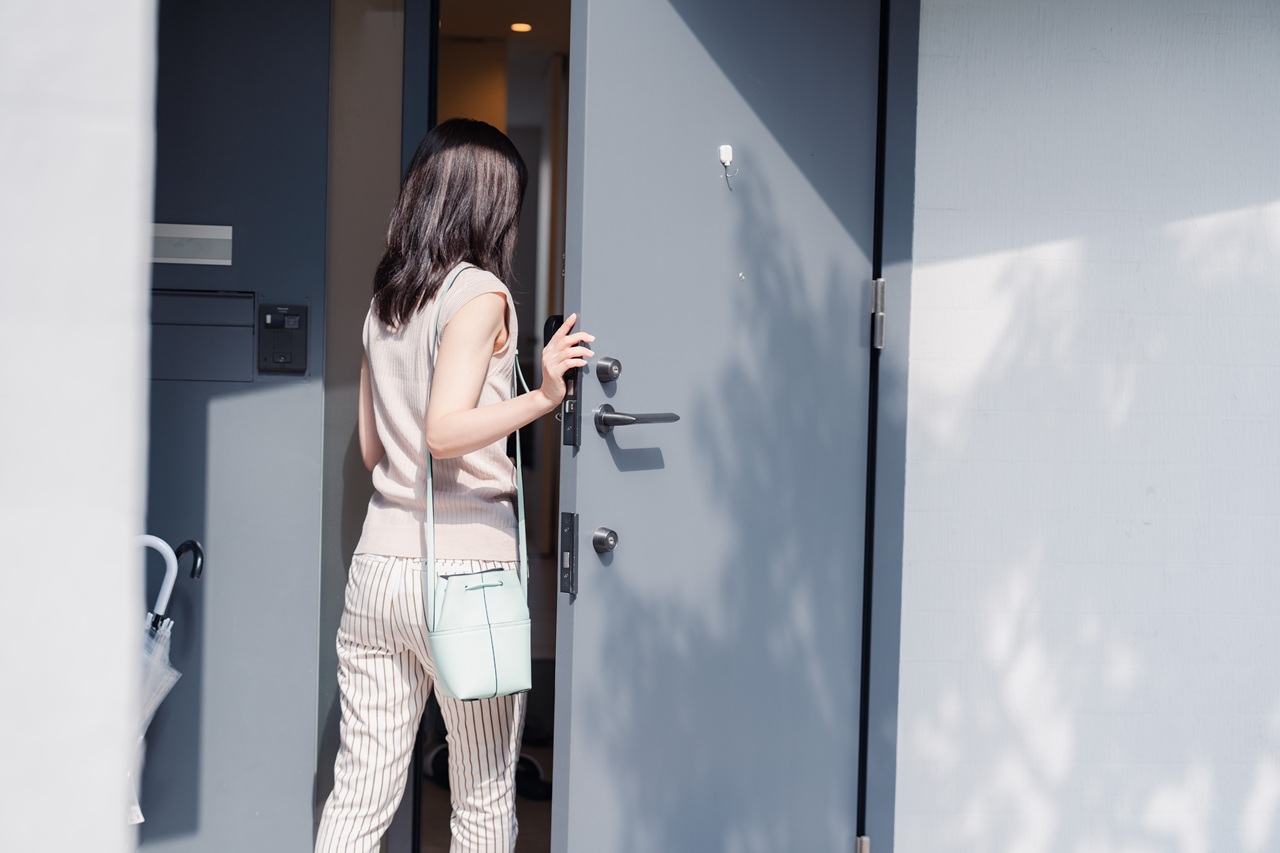
While internal doors often spring to mind when discussing the risk of finger entrapment, external doors pose more risk. Constructed using solid wood, metal or composite materials, external doors are much heavier than those found internally. This means that when a finger gets caught, the extra weight has the potential to cause more serious crushing injuries and fractures.
The closing force of external doors is stronger too. The self-closing mechanisms, hydraulic closers and spring hinges used to keep them secure give victims even less time to react and get their fingers to safety. External doors are also designed with wider gaps at the hinge side, creating yet more opportunities for fingers and hands to slip where they shouldn’t.
Environmental factors don’t help either, with exposure to wind, drafts and uneven ground causing more unpredictable movement.
The solution to outer door safety problems
Just like those internal doors, your external doors deserve the five-star safety treatment. Our MK1C door finger protector offers the perfect solution for external uPVC doors, providing ample coverage across the full length of the push side and facilitating door opening up to 90 degrees.
The design conceals all types of external door hinges, including flag and cylinder hinges, to prevent trapping injuries in opening and closing standard uPVC doors. The MK1C is the only proven door safety product for uPVC doors, with our MK1C Special version adapted for use on external uPVC doors with wider openings and bi-fold doors.
Browse our full product range, including our MK1C and MK1C Special door finger guards, here.

Sorry, the comment form is closed at this time.