


01 Oct When to Replace Your Finger Guard Strips: Signs It’s Time for an Upgrade
As with any safety device, the reliability of its protection depends largely on its condition, and door finger guards are no exception.
While minimal maintenance, door finger protectors require some upkeep to remain effective over time. Well-maintained or not, knowing when the time is right for replacement is vital to ensuring continued protection for all those within your property. Read on to discover the signs that say it’s time for finger guard strip replacement.
There are visible cracks or tears
Here at Fingersafe, we pride ourselves on using the highest quality materials to craft our door guards. Each pinch protector is constructed using a mix of quality, UL V-O rated PVC and TPE, a combination that makes it not only high impact resistant but easy to clean and maintain. Yet, not all finger protection products were created with such a high standard of material.
With guard materials ranging from PVC to rubber and even fabric, there’s a chance that door finger shield guards will become split, ripped or punctured over time. While some deteriorate faster than others, keeping an eye out for visible cracks and tears is a must. Once those appear, be sure to replace your guards promptly.
The guard has shrunk, warped or loosened
If the strip no longer sits flush with the door or frame, this is also a sign that replacement is required. The guard may appear shrunken, warped, or have loose sections that have detached from the frame or door.
There’s discolouration, fading and brittleness
As a rule of thumb, if the finger guard strips aren’t providing smooth, full, gap-free coverage of the hinge area, it is no longer safe and should be replaced.
PVC material may be highly resistant to damage, but it is not immune to it. The use of harsh cleaners in particular can cause issues over time, with the chemicals within resulting in irreversible damage as Ultimate Clean Solutions details:
“Caustic chemicals are strong and aggressive cleaners, often used to tackle tough stains and grime. These chemicals, such as sodium hydroxide or bleach-based cleaners, can dissolve grease, dirt, and organic material. However, they can also be harsh on surfaces, and using them incorrectly can result in discolouration or damage to the uPVC material. As a result, many cleaning professionals avoid using overly caustic substances on uPVC.”
Whether it’s sunlight, age or cleaning chemicals that have made the material of your guard brittle or faded, the affected protector should be replaced for the best results.
The protector no longer works as it should do
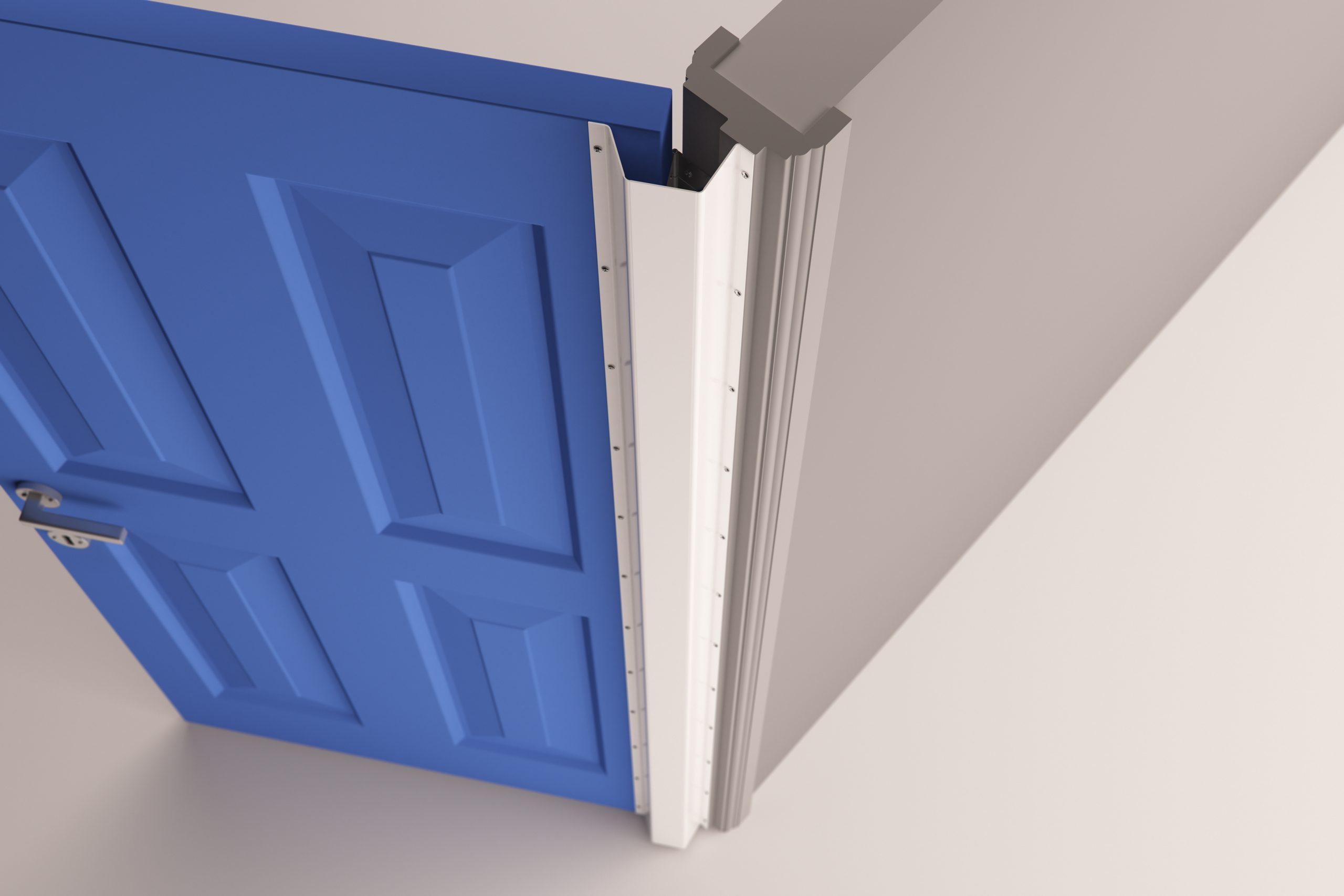
Flexibility is the key to operating doors with finger guards. Our hinge protectors use a concertina module alongside a unique fixing strip to ensure fluid operation and full coverage of dangerous hinge cavities. If the guard no longer expands and contracts smoothly when the door opens or closes however, it may be time to replace it.
Noisy operation is another clue that the guard isn’t as flexible as it once was, and has become misaligned or stiff in the process. Listen out for creaking, rubbing or scraping noises when the door is used.
Replace your finger guards with pure quality
Those in the market for high quality finger guard strip replacements needn’t search too far! Our door finger protection range caters to a wide range of door types, and uses the highest quality materials to ensure long lasting, easy to maintain protection. DIY installation also takes just minutes, while our professional fitting service offers ultimate peace of mind.
All our finger protection guards come with a two-year warranty on fair wear and tear, ensuring a product and service you can rely on now and into the future.
Find out more about our finger guards for door hinges by browsing our latest brochure.

Sorry, the comment form is closed at this time.